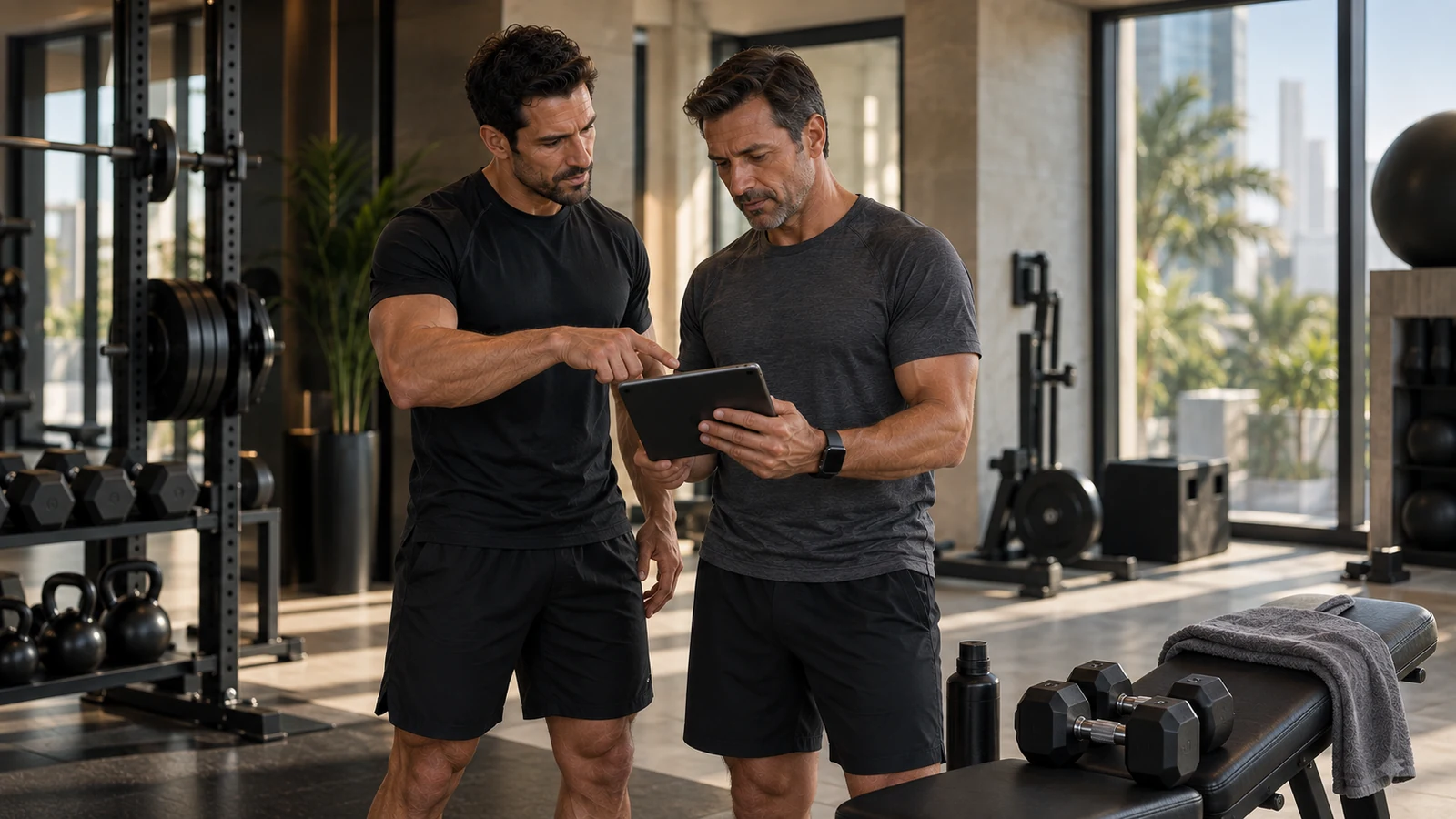
If you are weighing up a personal trainer against online coaching, the honest starting point is that this is not a contest with a single winner. Both can produce excellent results, and both can waste your money if they are the wrong fit for how you actually live and train. The useful question is not “which is better?” but “which is better for me?” — and that depends on how much hands-on feedback you need, how independent you already are, and what your schedule and travel realistically allow.
It also depends on being clear about what each term means, because a lot of confusion comes from comparing things that are not equivalent. In this article, personal trainer refers to in-person, one-to-one coaching. But online coaching can also be delivered by a qualified personal trainer — the difference is the channel, not the credential. And “online” itself covers very different things, from genuinely personalised remote coaching to live video sessions to generic plans you download and follow alone. Those are not the same product, and treating them as one is where most people go wrong.
What follows is a practical, non-promotional comparison: what each approach really offers, where each is stronger, what to check before you buy either, and a simple way to decide. It is written for busy professionals and expats in Dubai — including those over 40 — who want an experienced, honest answer rather than a sales pitch for one side.
In shortNeither in-person training nor online coaching is universally “better.” In-person wins on real-time feedback and hands-on accountability; quality online coaching wins on flexibility, travel continuity and value. The deciding factors are how much correction you need, how consistent and independent you already are, and how much your schedule moves — not the delivery method itself.
What “Personal Training” Actually Means
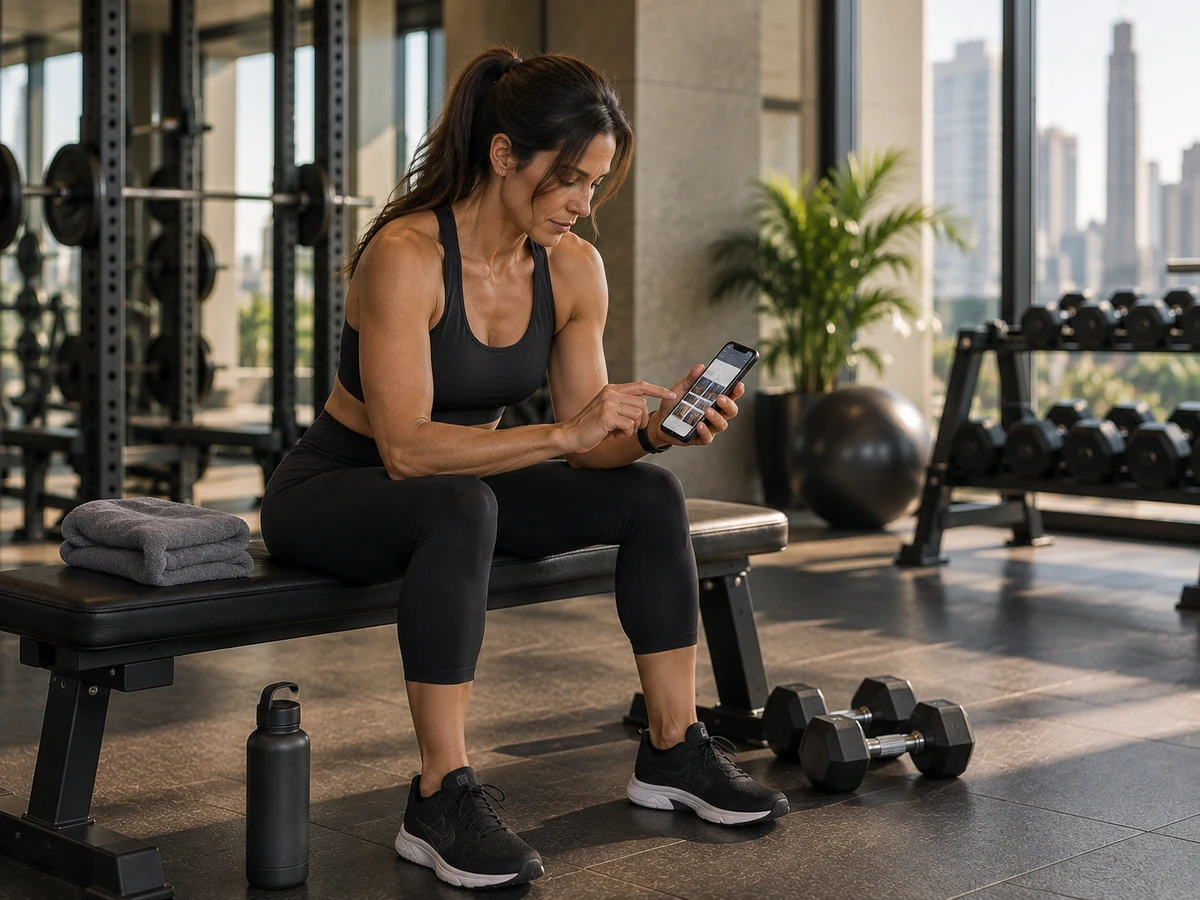
For the purposes of this comparison, a personal trainer means in-person, one-to-one coaching: a qualified coach in the room with you, watching each set, correcting technique as it happens, adjusting the session live, and providing the structure and accountability of a booked appointment. At V-ITAITALY this is delivered privately — including in-home and residential-gym settings — through structured one-to-one personal training packages rather than casual drop-in sessions.
The defining advantage is immediacy. A good in-person coach sees the rep you cannot see, changes the exercise the moment something looks off, pushes you to an effort you would not reach alone, and turns up whether you feel like training or not. For people who are new, who struggle with consistency without an appointment, or who simply learn best with hands-on guidance, that presence is difficult to replicate. It is also the most expensive way to be coached, precisely because it is the most resource-intensive.
What “Online Coaching” Actually Means — and What It Doesn’t
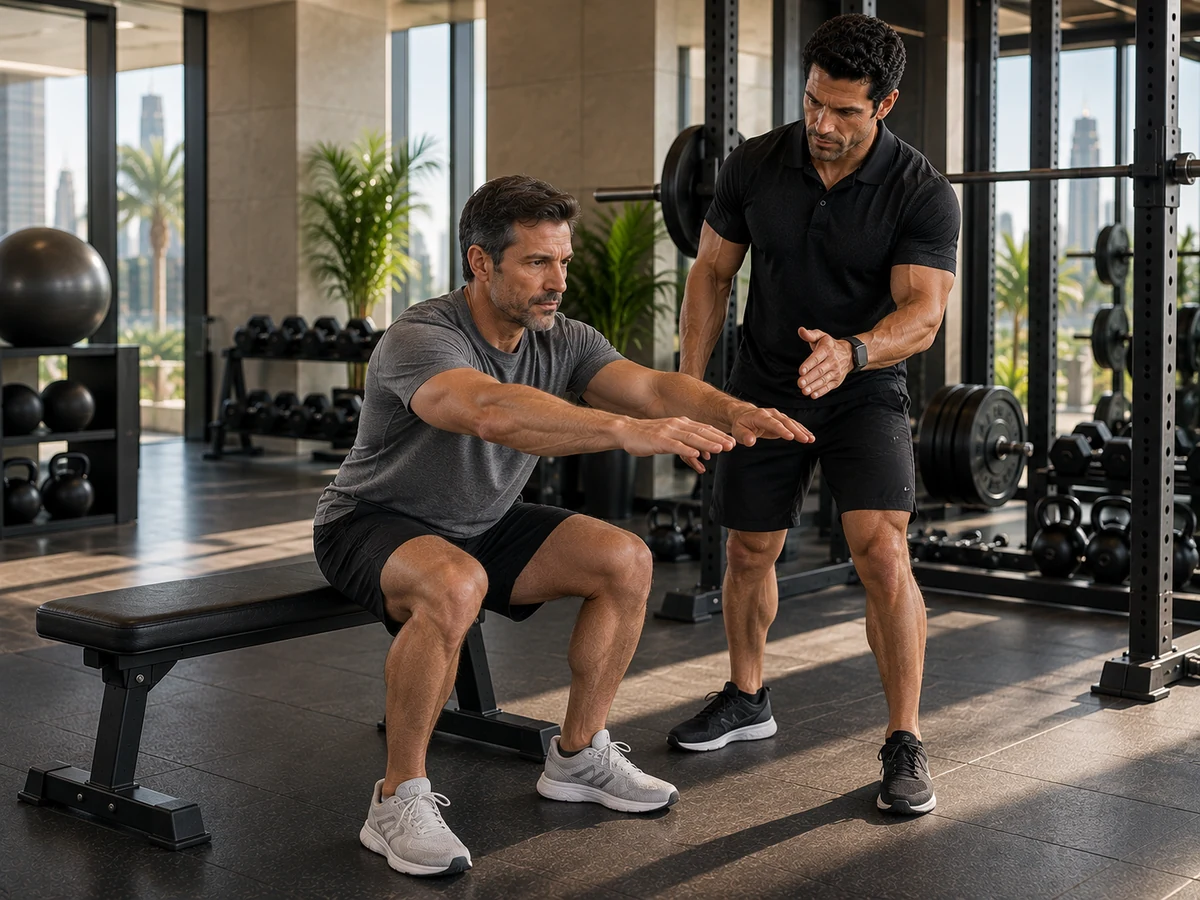
Online coaching is where most of the confusion sits, because the label covers a spectrum. At one end is personalised online coaching: a qualified coach builds a plan around your goals, equipment and schedule, delivers it — often through a training app — reviews your progress and technique from the video and data you send, adapts the programme over time, and keeps you accountable through regular check-ins. The training happens without the coach in the room, but the coaching is real and individual. V-ITAITALY’s online performance coaching works this way: app-based training and nutrition with structured, coach-led accountability.
In the middle sit live video sessions, where a coach watches and cues you in real time over a call — closer to in-person for feedback, though still without hands-on adjustment. At the far end are generic downloadable programs: the same PDF sent to everyone, with no personalisation, no review and no one adjusting anything. That last category is not coaching at all, and it is the reason some people wrongly conclude that “online does not work.” When you compare a personal trainer with online coaching, make sure you are comparing real, personalised coaching — not a template — or the comparison is meaningless.
In-Person vs Online: The Honest Comparison
The table below sets the two side by side on the factors that actually decide the experience. Read the online column as personalised, coach-led online coaching — not a downloaded template — and remember that specifics vary by the service you buy.
| Factor | In-person personal training | Personalised online coaching |
|---|
| Feedback during exercise | Real-time, hands-on correction within the rep | Detailed feedback from submitted video; live-video options exist, but not in-the-rep |
| Flexibility of schedule | Tied to booked appointments and coach availability | Train when it suits you, within the plan |
| Autonomy required | Low — the session is led for you | Higher — you run the sessions yourself |
| Personalisation | High, adjusted live | High when truly individualised; absent in generic plans |
| Progress monitoring | In-session observation | Via app data, logs and check-ins you keep up to date |
| Continuity while travelling | Interrupted when you are away | Travels with you; adaptable to hotel or limited gyms |
| Cost structure | Highest — reflects one-to-one time | Lower per month for comparable programming and oversight |
When In-Person Coaching Is the Better Choice
In-person training earns its higher cost in specific situations. If you are new to structured training and unsure of the fundamental movements, having technique watched and corrected in real time shortens the learning curve and lowers the risk of grooving in bad habits. If you know from experience that you will not train hard — or at all — without someone there expecting you, the accountability of a booked session is worth more than any programme on a screen.
It also suits people who value the hands-on element itself: real-time coaching cues, immediate adjustments, and an expert reading your effort and fatigue in the moment. Research is broadly consistent with this: trials comparing supervised training with unsupervised or self-guided approaches have reported better adherence under direct supervision, and in some cases higher training loads and strength gains. If real-time feedback and external accountability are what you genuinely need, in-person coaching is likely the stronger investment, and our honest look at whether a personal trainer is worth it explores the trade-off in more depth.
When Online Coaching Is the Better Choice
Personalised online coaching comes into its own for people who are already reasonably confident and consistent. If you can run a session on your own, show up without someone standing over you, and simply need an expert to design the right plan, progress it intelligently and keep you honest, online coaching gives you most of the value of a coach at a lower price point — and with far more flexibility about when and where you train.
It is also, for many, the more realistic option. What makes online coaching work is the same thing that makes any coaching work: real personalisation, ongoing feedback and regular review. That is exactly what a generic downloadable program lacks — the same template sent to everyone, with no one adjusting it as you go — which is why personalised online coaching and a downloadable plan should never be treated as the same thing. The evidence here is about structure and adherence rather than any proven advantage of one delivery format over another: what matters is a plan built and adjusted for you, not the coach’s physical presence. If you train reliably, travel often, or cannot commit to fixed weekly appointments, well-run online coaching frequently beats an in-person arrangement you keep having to cancel. This is closely related to the question of whether you can get fit without a personal trainer, where the honest answer is: yes, with the right structure.
Technique, Feedback and Autonomy: What Really Changes
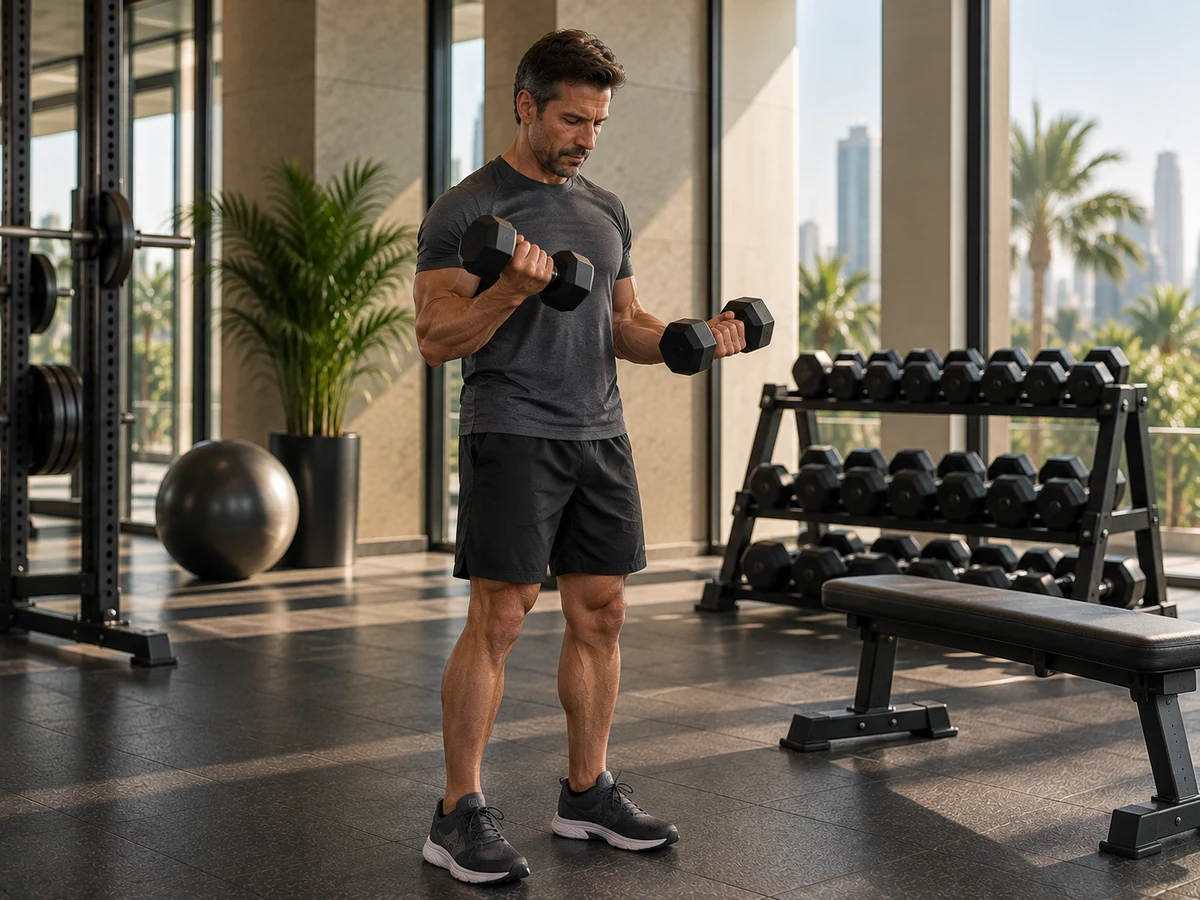
The clearest practical difference between the two is the feedback loop. In person, correction happens inside the rep: a coach can cue your setup, catch a breakdown as it starts, and adjust the load or exercise on the spot. Online, feedback is asynchronous for most services — you record a set, send it, and receive considered corrections shortly after — which can actually be more detailed, because the coach can watch it back, but cannot fix the rep in the moment. Live-video coaching narrows this gap without fully closing it.
The mirror image of feedback is autonomy. In-person coaching asks little of you between the setup and the effort; the session is led. Online coaching asks you to run the sessions yourself, log honestly, and send what your coach needs to keep the plan on track. Neither is better in the abstract — it is a question of what you need. The more real-time correction you require, the more in-person matters; the more capable and self-directed you are, the more online rewards you. If you are still choosing a coach in either format, our guide to how to choose a personal trainer applies to both.
Accountability and Adherence: What to Check in Either Service
Accountability is where good coaching of either kind lives, so interrogate it directly before you buy. For in-person, that is largely built in: the appointment itself is the accountability, and the value is in what the coach does with the hour. For online, accountability is a design choice — so ask exactly how it works: how often the coach reviews your progress, how technique feedback is handled, how quickly you can expect a response, and how the plan is adapted over time. A service that cannot answer those clearly is selling you a template.
The single most important thing to establish, on either side, is that the coaching is genuinely individual. A personal trainer who runs the same session for everyone, or an “online coach” who sends the same plan to every client, is charging coaching prices for something that is not coaching. Real personalisation — a plan built for you and adjusted as you go — is the common thread behind results in both formats, and its absence is the common thread behind disappointment.
Cost and the Value of Support
Cost is usually where the decision becomes concrete, and the two models sit at different points by design. In-person one-to-one training is the most expensive way to be coached because you are paying for a qualified coach’s undivided time, session by session. Personalised online coaching typically costs less per month for comparable programming and oversight, because the coach’s expertise is delivered without the one-to-one time in the room. Neither is “overpriced” — they are priced for different things.
The right way to think about value is cost against what you will actually use and follow. Paying a premium for in-person sessions you frequently cancel is poor value; paying less for online coaching you ignore is no better. The best-value option is the one you will adhere to for months, which loops back to the honest self-assessment this article keeps returning to. If you want the full picture on in-person pricing specifically, we cover it in what personal training costs in Dubai, and the broader gym-versus-coaching question in personal trainer vs gym membership.
Busy Professionals in Dubai: Home Gyms, Schedules and Travel
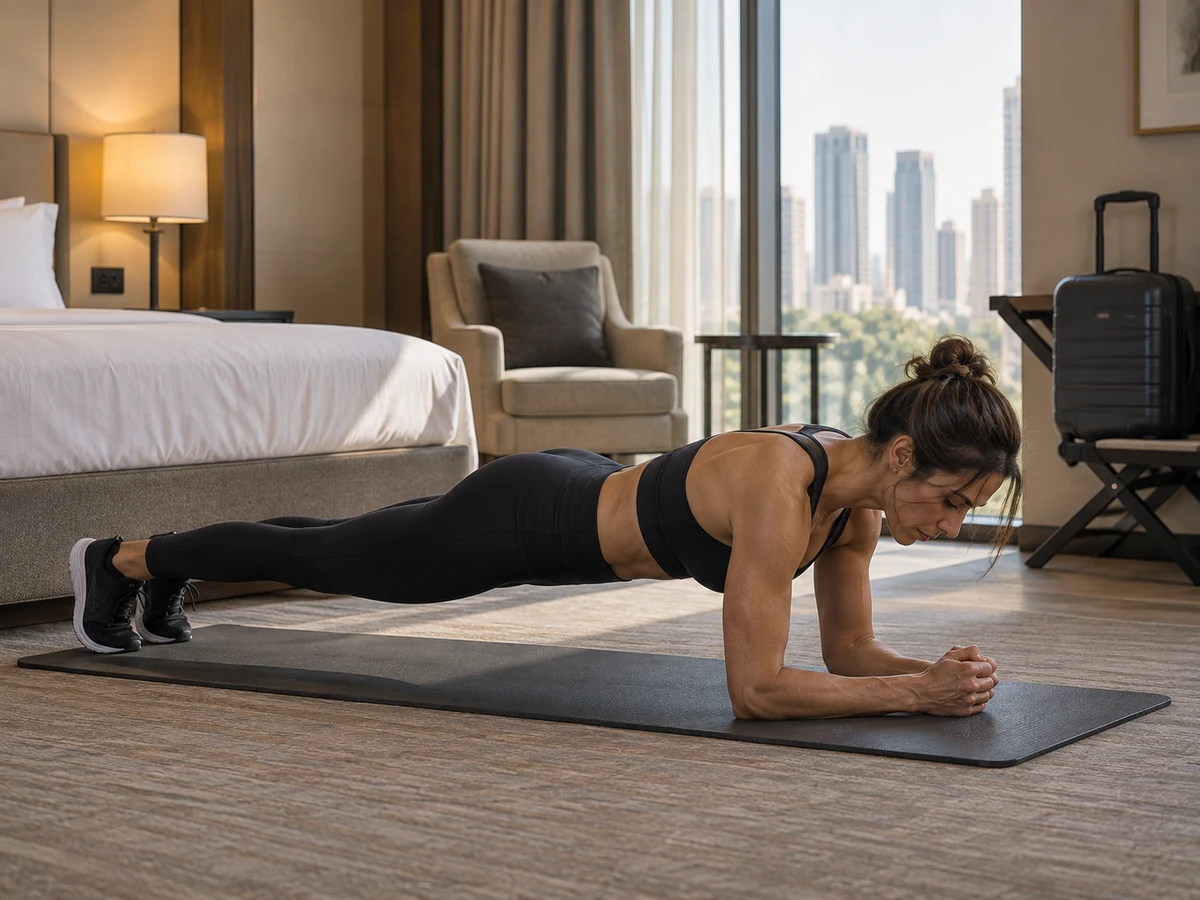
For the audience this comparison is really written for — busy professionals and expats in Dubai, many over 40 — the deciding factors are often logistical rather than philosophical. Long hours make fixed weekly appointments hard to protect. Frequent travel breaks the rhythm of any in-person schedule. Many residential towers have a building gym that is perfectly adequate for a well-designed programme, which makes home-based or online-guided training genuinely viable rather than a compromise.
If your calendar is stable and you are in Dubai consistently, in-person coaching is straightforward to sustain and hard to beat for hands-on quality. If your weeks move around, or you are on a plane often, coaching that travels with you protects the one thing progress depends on most: continuity. This is exactly the scenario where the delivery method, not the coaching quality, becomes the deciding factor. For a practical plan built specifically around frequent trips, see our guide to maintaining your fitness during frequent business travel.
When a Hybrid Path Can Fit
For many busy people the honest answer is not one or the other but a considered blend. A hybrid arrangement pairs periodic in-person sessions — useful for assessment, technique work and the harder-to-coach elements — with online programming and accountability in between, so you keep expert oversight without needing a fixed weekly slot. V-ITAITALY offers a structured hybrid coaching option built around exactly this pattern, particularly for frequent travellers.
A hybrid model is a practical delivery choice, not a premium tier by default — the right blend still depends on the same factors as everything above: how much feedback you need, how independent you are, and how much your schedule and travel move. Choose the mix that matches your situation, rather than assuming more of everything is better.

A Simple Way to Decide
If you are still unsure, work through these honestly and let your answers point you rather than looking for the “right” one:
- If you are new or unsure of the movements — start in person, or online only with genuine video-based technique review; move online once you are confident.
- If you struggle to train without an appointment — the built-in accountability of in-person sessions is likely worth the higher cost.
- If you already train reliably on your own — personalised online coaching gives you expert programming and oversight at better value.
- If you travel often or your schedule moves — online or hybrid coaching protects continuity that in-person alone cannot.
- If budget is the binding constraint — quality online coaching delivers most of the value for less, provided it is genuinely personalised.
- If you want the best of both — a hybrid blend of periodic in-person sessions and online accountability may fit best.
Notice that none of these turns on which method is “better” in general. Each turns on you — your experience, your consistency, your calendar and your budget. That is the whole point: the right choice is the one that fits your life closely enough that you will actually keep doing it.
Frequently Asked Questions
Is online coaching good for beginners?
It can be, but with an honest caveat. A complete beginner benefits most from having technique watched and corrected in real time, which is easiest in person. Good online coaching can still work for a beginner if it includes genuine personalisation and a way to review your form — for example by sending video of your lifts for feedback — rather than just a plan to follow alone. If you are entirely new and unsure of the basic movements, a period of in-person coaching first, then a move online once you are confident, is often the most sensible path.
What is the difference between online coaching and a downloadable program?
A great deal. A generic downloadable program is the same document sent to everyone: it is not built around your body, equipment, schedule or progress, and no one adjusts it as you go. Personalised online coaching means a qualified coach designs a plan for you, reviews how it is going, adapts it over time and holds you accountable — the training is remote, but the coaching is real. Comparing the two as if they were the same is the most common mistake people make when they decide online “does not work.”
Can a coach really assess my technique online?
To a meaningful degree, yes, though not identically to being in the room. Many online coaches review technique from video you record and send, and can give detailed, specific corrections — sometimes more considered than a quick cue mid-set, because they can watch it back. What online cannot do is make a real-time adjustment during the rep itself. For most exercises and most people that trade-off is manageable; for very technical lifts, or when something feels wrong, in-person eyes still have the edge.
Which is better for building strength or changing body composition?
Both can deliver either goal, because results come from a sound plan applied consistently over time — not from the delivery method itself. In-person coaching tends to support higher effort and adherence for people who need that presence; well-run online coaching gives structure, progression and accountability to people who train reliably on their own. The better choice is the one you will actually follow for months, which depends on you rather than on the label.
Do I need a gym for online coaching?
Not necessarily. Good online coaching is built around the equipment you actually have — a full commercial gym, a residential building gym, or a modest home setup. A capable coach programmes for your reality rather than an ideal facility, which is part of the point of personalisation. What matters is being honest about your equipment up front so the plan matches it.
What happens to my training when I travel a lot?
This is one of the clearest points in favour of an online or hybrid approach. A remote plan travels with you, can be adapted to hotel or limited gyms, and keeps continuity through weeks that would otherwise break an in-person schedule. If frequent travel regularly interrupts your sessions, coaching that reaches you wherever you are will usually beat an in-person-only arrangement you keep having to cancel.
How do I decide how much support I actually need?
Be honest about a few things: how confident you are with the exercises, how consistent you are without someone expecting you, how much your schedule and travel disrupt training, and what feedback you genuinely miss when training alone. The more you need real-time correction, external accountability or hands-on structure, the more in-person coaching earns its cost. The more independent and consistent you already are, the more online coaching gives you expert programming and oversight at a lower price point.
Can I combine in-person and online coaching?
Yes, and for many busy people that blend is the most practical answer. A hybrid arrangement pairs periodic in-person sessions — for assessment, technique and the harder-to-coach work — with online programming and accountability between them, which suits people who travel or cannot commit to a fixed weekly slot. Whether pure in-person, pure online or a blend is right depends on the same factors throughout this article: feedback needed, autonomy, schedule, travel and budget.
The Bottom Line
So, personal trainer or online coaching — which is better for you? In-person training is the stronger choice when you need real-time feedback, hands-on correction or the accountability of a booked session, and you have the schedule and budget to sustain it. Personalised online coaching is the stronger choice when you already train reliably, value flexibility, travel often, or want expert programming and oversight at better value. And a hybrid of the two is frequently the most practical answer for busy people. What matters is honest personalisation and a format you will actually stick with — not the delivery method in the abstract.
If you would like help deciding which fits your situation, the simplest next step is a conversation with an experienced coach who will give you a straight answer rather than a pitch. You are welcome to book a complimentary trial session, and we can talk through in-person, online and hybrid options based on your goals, your schedule and how you actually like to train.
This article is educational and does not constitute medical advice. Individual needs and responses vary; if you have a medical condition, an injury or persistent pain, consult a qualified professional before beginning or changing a training programme.